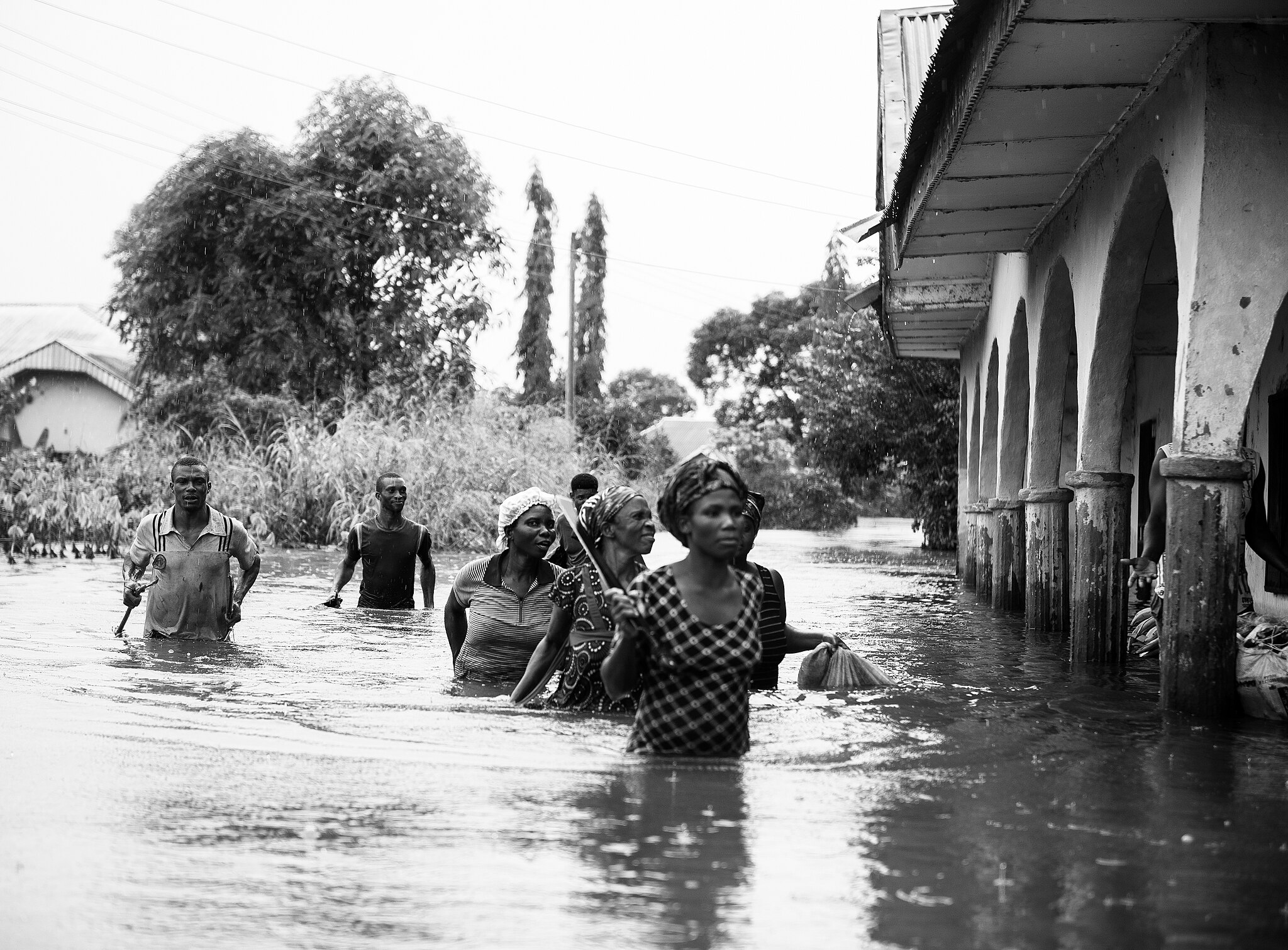
Together with my co-author Irmak Gunal, I have also worked on climate risk in developing contexts. A recent working paper, presented at the SITES 10th Annual Conference in Rome, explores the link between biases in the perception of extreme weather events (particularly droughts and floods) and gaps in adaptation to climate change.
In this study—which sits at the intersection of environmental economics, development economics, and behavioral economics—we make use of a rich panel survey collected in Tanzania, following a representative sample of households over time.
We first identify biases in households’ perceptions of the weather and climate events they experience, thus highlighting a series of factors that mitigate behavioral biases and make their beliefs about climate events more adherent to the reality. We also perform a heterogeneity analysis by occupation, focusing on households that rely primarily on agriculture for their livelihood (and are therefore more exposed to climate risk).
In a second step, we correlate errors in climate risk perception with adaptation gaps, pointing out how households with mistaken perceptions suffer significant economic damage as a result of floods and droughts occurring in their area.
The paper makes use of a rich array of high-granularity and high-frequency (monthly or daily) climate data, including temperature, precipitation, and drought indices. The empirical work was carried out using R and STATA.
Please feel free to contact me or Irmak for any additional information, clarifications, suggestions, or collaborations.
References
Günal, I. and Mutasci, F. (2025). Household perceptions and responses to climate shocks: Evidence from Tanzania. Working Paper, University of Milan and University of Copenhagen.